


English
- English

CONTACT US
If you have any queries, get in touch today! Don't hesitate. We try to take the extra step for our customer satisfaction.
Our News
Carbon Conversions offers recycling solutions to companies that need to dispose of excess carbon fiber from decommisioned parts.
Original text, "Next-gen fan blades: Hybrid twin RTM, printed sensors, laser shock disassembly
2025-09-03 13:43:46
Click:
“
The
MORPHO project demonstrated that RTM-cured blades were 20% faster in
the cur
”

The MORPHO project demonstrated that RTM-cured blades were 20% faster in the curing process. It utilized AI-based monitoring to improve maintenance/life cycle management, and proved that laser impact disassembly could be recycled.
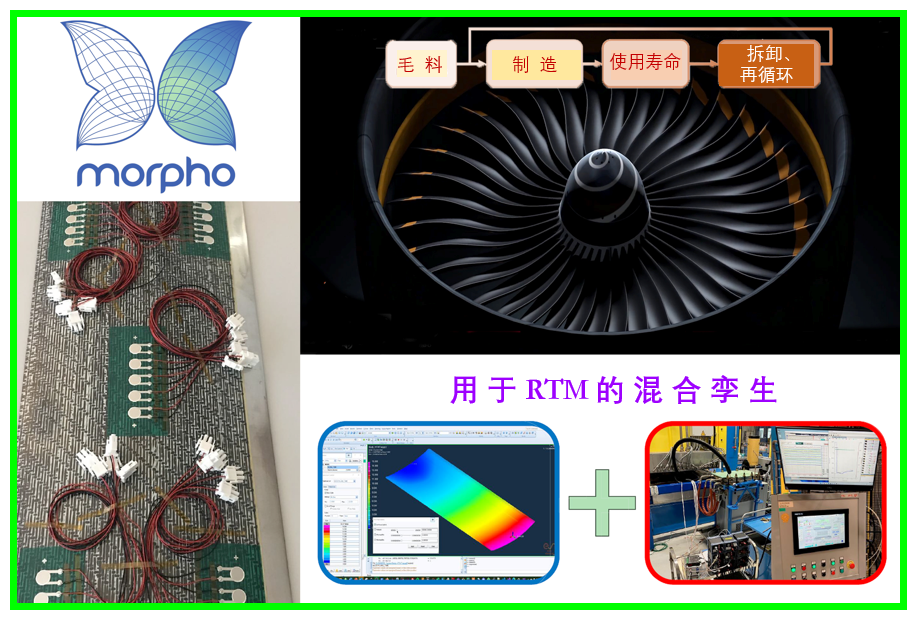
MORPHO (Manufacturing, Overhaul, Maintenance, Post-Service Health Coverage) is a research project funded by Horizon 2020 (from September 2021 to January 2025), aiming to optimize the manufacturing and life cycle management of carbon fiber reinforced polymer (CFRP) aircraft engine fan blades. Therefore, it will expand Europe's industrial leadership by promoting cost-effective, flexible and eco-friendly manufacturing, maintenance and recycling processes for the next generation of multi-functional composite material aircraft parts.
Alliance and Objectives
The MORPHO consortium is composed of 10 partners from six countries. Under the leadership of the National School of Arts and Crafts in Paris (ENSAM) of France, it includes the aero-engine manufacturer Safran Technologies (Paris, France), the Fraunhofer International Aero Engine Consortium (Bremen, Germany), Delft University of Technology (Delft, the Netherlands), and Patras University (Patras, Greece), as well as the sensor suppliers Synthesites (Piraeus, Greece), Comet Group (Sartre, Belgium), and FiSens (Braunschweig, Germany), along with the Spanish partner FEUGA responsible for communication and dissemination, and the simulation software provider ESI.
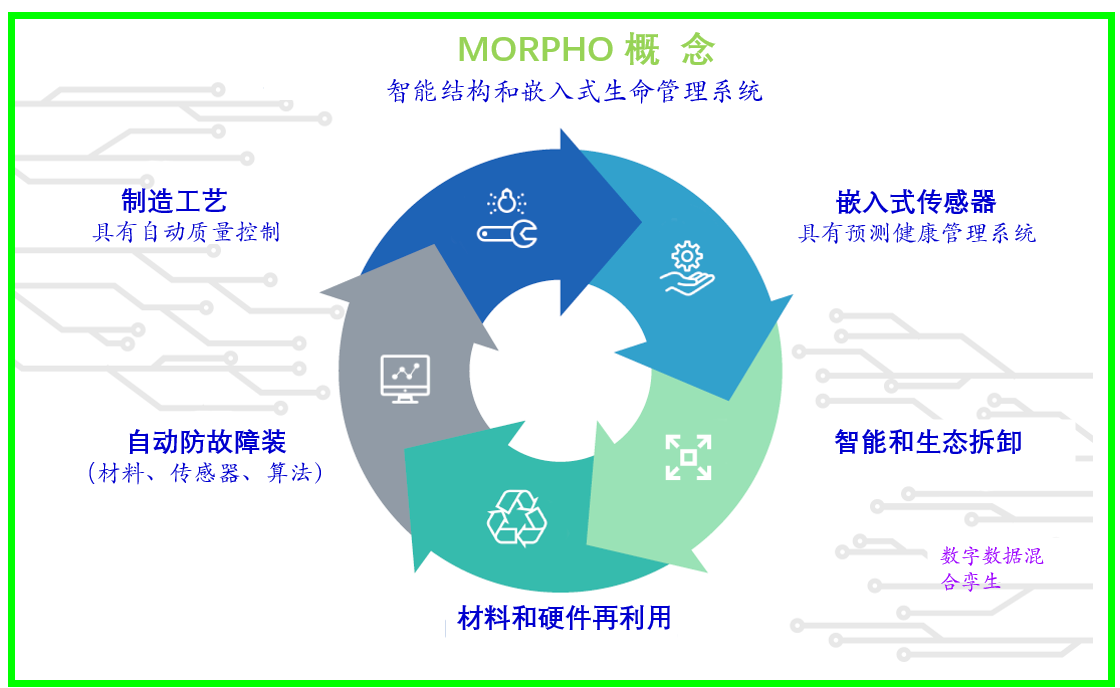
Nazih Mechbal, the director of the PIMM (Mechanical and Materials Processing and Engineering) laboratory at ENSAM, which has 180 employees, explained: 'Our goal is to define an industrial process for manufacturing multifunctional (or 'intelligent') composite fan blades, which are also made of multiple materials, with the leading edge being titanium.' 。'We aim to implement lifecycle management by embedding sensors and through data-driven hybrid twins and machine learning algorithms, thereby endowing it with cognitive functions from manufacturing to the end of the lifecycle. We also intend to develop an industrialized disassembly process for separating and recycling the titanium leading edge and composite material structures.'
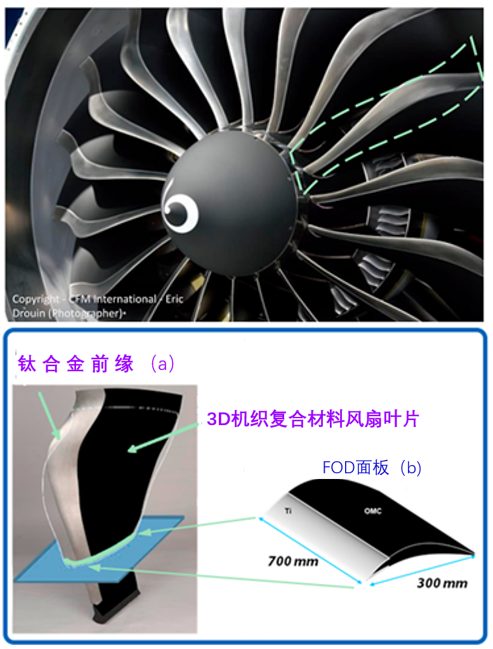
The MORPHO demonstrator is a panel damaged by foreign objects (FOD-), representing a part of the LEAP engine fan blade.
To prove this point, the MORPHO consortium developed a foreign object damage (FOD) panel, 'representing the fan blades of the LEAP engine,' said Mehbar. 'And it was used by Safran Group to test all these capabilities.' This project achieved several accomplishments, including:
Optimized the RTM process, using advanced dielectric sensors and real-time data analysis to monitor viscosity, Tg and curing, reducing the curing cycle by 20%.
The hybrid twin model of the RTM process predicts resin flow and curing within 1 millisecond, with an error of less than 1%; integrating high-fidelity physics-based simulation with real-time process data enables the identification of local permeability in woven preforms, significantly improving quality control in the production process.
An aviation engine fan blade structure prediction and health monitoring (SHPM - structural prognostics and health monitoring) system based on artificial intelligence, which integrates low-frequency fatigue testing, advanced sensing technology and deep learning architecture, can predict stiffness degradation and remaining useful life (RUL) based on strain and other measurement results.
Demonstrated the laser impact removal of CFRP blades from the titanium leading edge, and used simulations to adjust process parameters to ensure the composite material is not damaged, allowing for recycling/reuse.
RTM Hybrid Twins

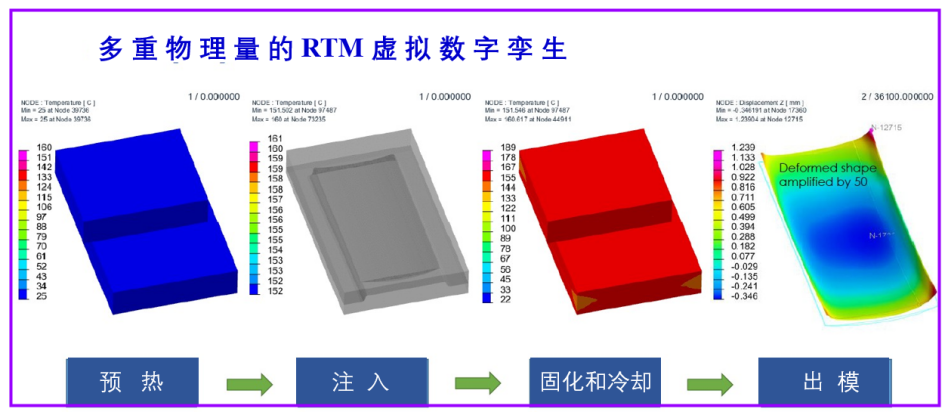
The hybrid twins in the MORPHO project (shown in the upper image) originated from multiple physical fields and digital models/virtual twins (shown in the lower image)
Meherbal said: 'Digital twin refers to creating a replica of a system by using a digital model for simulation.' 。'In the hybrid twins, we enabled a dialogue between digital data and physical data obtained from sensors. To achieve this, we first constructed a physics-based RTM process simulation and finite element (FE) simulation, and then added data-driven online learning to create the hybrid twins.'
Virtual twins. The virtual twin of the RTM process is a digital twin, which is developed as a multi-physics field model, including multiple steps:
Resin injection (Newtonian fluid flowing into the 3D fabric, Darcy's law, the possibility of forming a track or dry point)
Solidification (polymer kinetics, Kamal Souror model)
Heating/cooling (conduction + convection, thermally-dependent mechanical properties).
Meherbal said: 'From this complete physical model that requires time and computing power, we use an appropriate general decomposition (PGD-proper general decomposition) or any other physics-based simplification method to extract a simplified model.' 。Although these simplified models are quick and can operate dynamically during the RTM process, there will still be differences in the physical data. This is where we use artificial intelligence. We only use it to estimate these differences. Therefore, we retain as much physical knowledge as possible, and only use the 'blind-blind' method for the differences that may arise from model simplification and unmodeled phenomena (such as noise, environmental conditions, etc.).
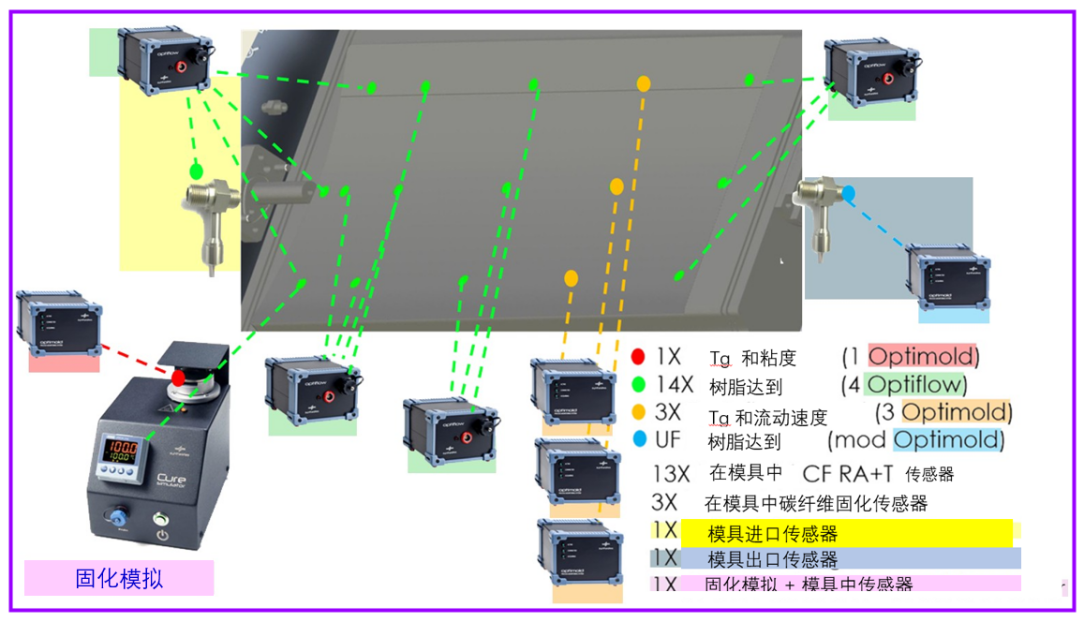
The physical layout of the Synthesites, dielectric sensors and data acquisition units in the FOD panel demonstrator of the MORPHO project
Physical measurement. For the second part of the mixed twins, MORPHO used two types of sensors during the RTM process. The Synthesites dielectric analysis (DEA - Dielectric analysis) sensor was used for process monitoring and measuring the resin flow front. The left image describes the equipment setup.
As I explained in my 2020 blog about Synthesites, DEA has been used for several decades. For MORPHO, Synthesites provided durable in-mold sensors and online sensors at the inlet and outlet gates, and input the data into the Optiflow and Optimold data acquisition units. The Optiflow device monitors the resin arrival and temperature, and can identify production deviations during the resin penetration process. The Optimold device uses temperature and resin resistance measurements for calculations and monitoring of the resin's state, including mixing ratio, chemical aging, viscosity, Tg and curing degree. Then the data is analyzed, and the results are displayed on a laptop using Synthesites' ORS software.
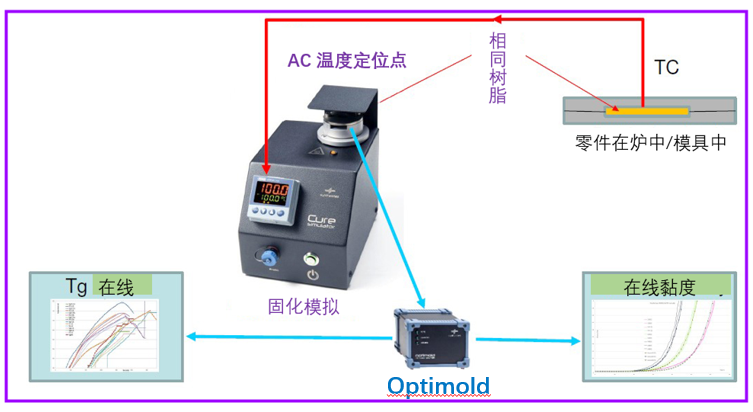
The solidification simulator used for predicting solidification in the MORPHO project
Furthermore, this setup also utilizes another device, namely the solidification simulator. As I explained in my 2022 blog about the SuCoHS project, by using only one thermocouple, the solidification simulator can replicate the solidification process that occurs within the RTM mold (or autoclave), and determine the degree of curing of the composite material to determine its curing point. As Wilco Gerrits, a senior R&D engineer and SuCoHS project manager at the Royal Netherlands Aerospace Centre (NLR, Marknesse), explained, 'This enables the autoclave process to be ended when the autoclave meets your curing requirements, rather than keeping it at temperature for an additional half-hour for safety reasons.'
Meherbal said: 'But we also studied the process of placing optical fibers with FiSens FBG-fiber Bragg grating sensors into 3D woven composite preforms.' 。'We used a manual method as a proof of concept, and employed a more automated weaving process. Since this was a 3D pre-form, we simply weaved another optical fiber there. We conducted numerous tests on the 3D woven pre-form, and integrating the FBG sensor did not have a significant impact.'
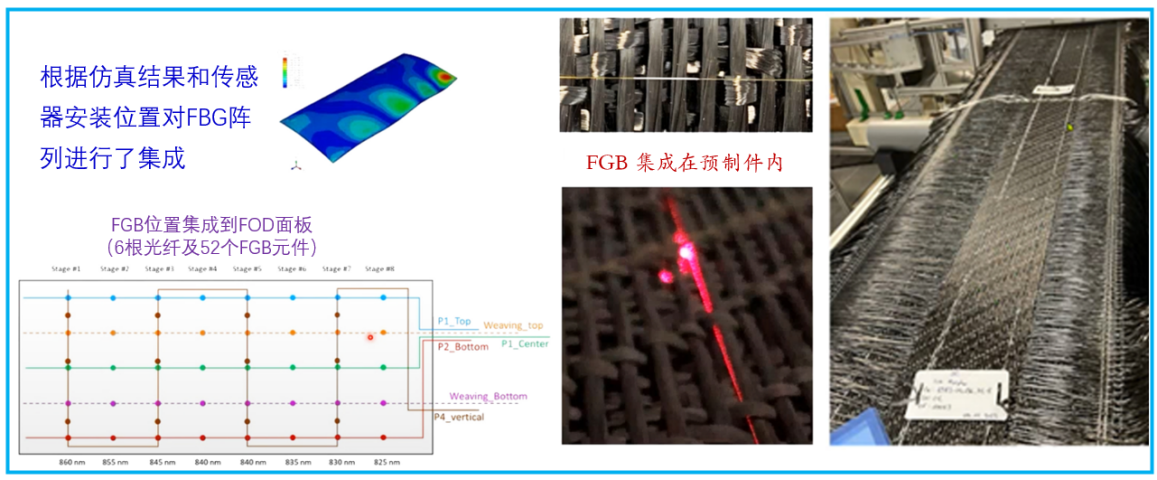
The fiber Bragg grating (FBG) sensor is integrated into the FOD panel.
RTM trial
Using the steel matching mold assembly designed by Safran Group, MORPHO conducted multiple RTM tests and developed a repeatable and robust sensor and hybrid dual-method approach. 'For instance, we use virtual twins to predict real-time physical parameters such as the resin permeability of the preformed parts,' explained Mehbar. 'We also obtained inputs from DEA and FBG sensors, which provide us with actual resin flow rates. We can compare these with the simulation results in real time. Due to the layout of the sensors, this includes showing how the permeability changes with the region.'
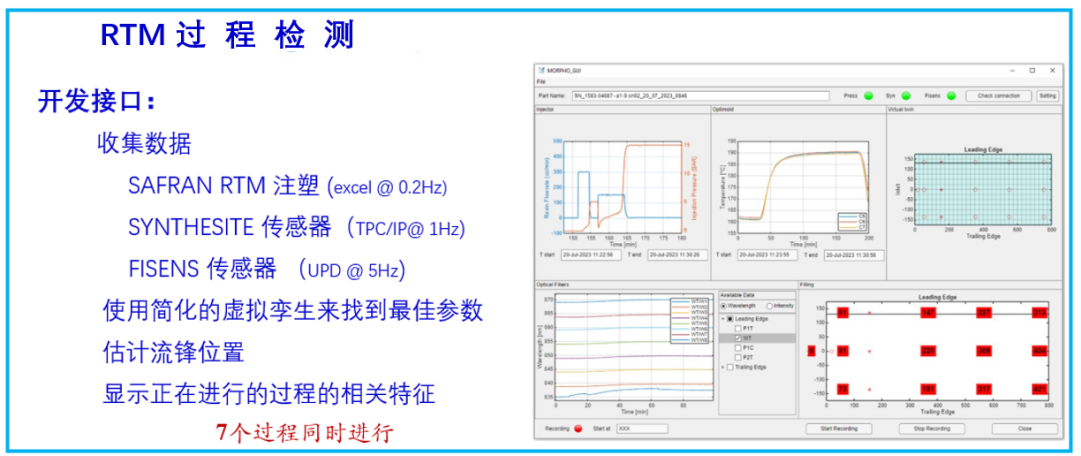
During the RTM trial, the MORPHO project demonstrated the ability to monitor resin injection, pre-form filling and curing.
A specific data acquisition interface was developed in MATLAB to collect data from all sensors (optical fiber/FGB, resin arrival, flow, pressure and temperature). Mehrab said that this interface is also connected to the hybrid twin, which can predict the position of the flow front and local material properties in real time. It also enables real-time communication between RTM tests and the hybrid twin, thanks to parallel processing, allowing simultaneous handling of simplified models and experimental measurement data. It can also load simplified models and sensor/process data measurements offline during RTM for further analysis, and can read HDF5 files as well as all original source files.
He added that the vision is to continue advancing this technology so that the RTM process can be adjusted on-site as needed.
Using printed PZT sensors for SHM
The original vision of the MORPHO project has always been to utilize sensors, which not only enable more efficient manufacturing processes but also confer cognitive functions to the parts during their usage, including structural health monitoring (SHM - structural health monitoring) and maintenance prediction capabilities. Mehrab said: 'The sensors we use to optimize the RTM process will also be used for SHM to detect impacts, etc.' 。'However, for this purpose, we have added other types of sensors, including piezoelectric (PZT-piezoelectric) sensors, which are printed on the surface of the FOD panel.'
Although fiber optic gratings for structural health monitoring have reached TRL 8-9 in the aerospace industry, Mehbar's expertise lies in PZT technology. Therefore, his team at ENSAM collaborated with MORPHO partner Fraunhofer IFAM to develop PZT sensors for SHM. 'Although we know that FBG sensors will provide a lot of information about strain and can be used to predict the remaining life of the structure,' he explained, 'we saw that PZT sensors have the ability to complement this.'
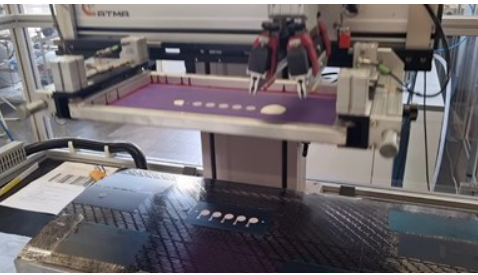
Print the piezoelectric sensor onto the FOD panel
Print PZT. Use silver conductive paste and piezoelectric paint for screen printing on the FOD panel to create a three-layer sensor, including the top electrode, a 135-micron thick piezoelectric layer, and the bottom electrode. Mehbar said: 'After printing, the parts will enter the oven to achieve polarization.' 。This triggers the piezoelectric effect, enabling the sensor to convert mechanical stress into electrical signals and vice versa. For MORPHO, the printed sensors were treated at 100°C for 30 minutes. He added: 'This is a very feasible process for industrializing composite material fan blades.' 。'We can also print wires on the components, but for MORPHO, we don't want too many variables, so we only used regular wires and connectors to reduce complexity.'
PZT Sensor Testing
A series of tests were conducted on the FOD panel with PZT sensors printed on its surface, including:
Electromechanical impedance, which is used to detect impact events and determine their location and impact energy.
Acoustic emission, as a passive method for monitoring the damage process.
Lamb wave interrogation, which is used for actively monitoring the occurrence and evolution of damage.
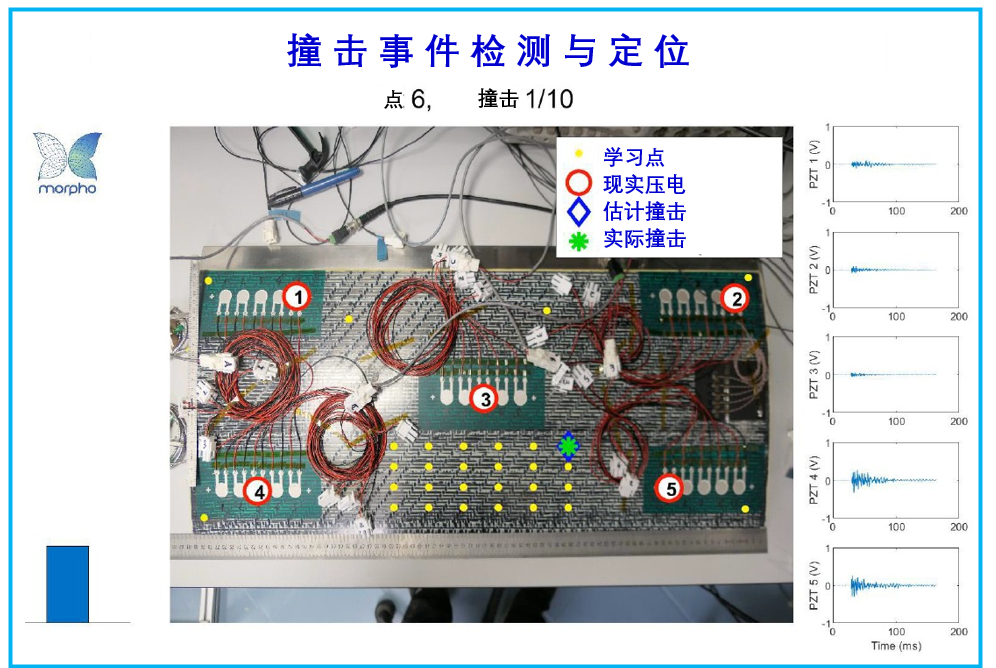
Tests to detect the damage, location and energy level of the impact event. Please note
The impact position estimated by the sensor is indeed the actual position.
Meherbal explained: 'By using FOD panels with titanium and aluminum edges, we proved that we could detect the damage caused by hammer impacts, including the location and level of the energy. This can be done automatically because the PZT sensor is a passive method. In this case, we did not send waves, but simply listened and applied algorithms based on the correlation with parameters such as flight time. Then, these algorithms provided the location and level of the impact energy received by the FOD panel.'
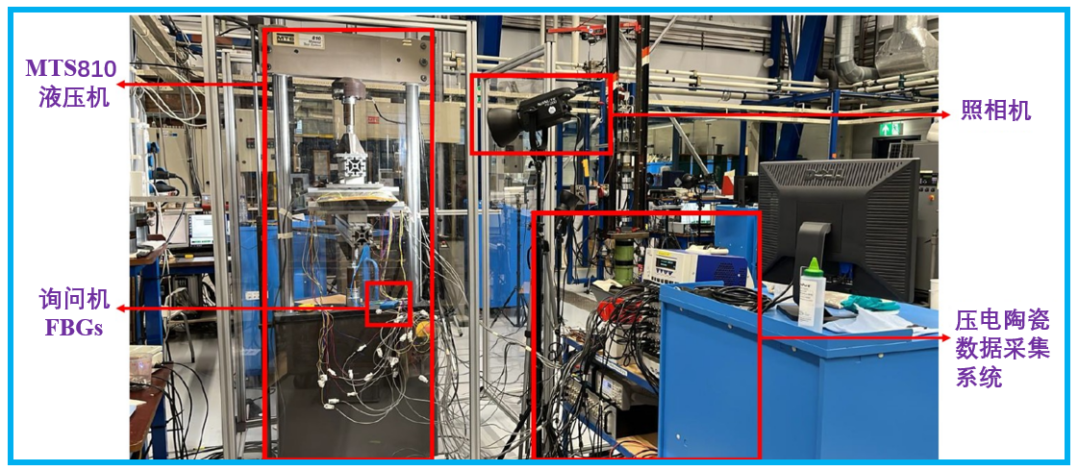
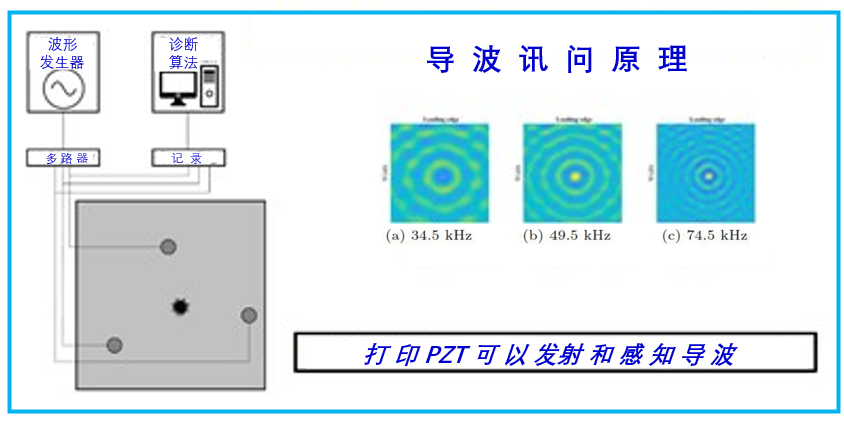
The tests conducted by Delft University of Technology employed PZT and FBG sensors for impact and fatigue (as shown in the upper figure), as well as Lamb wave research (as depicted in the lower figure)
The test panels also underwent fatigue tests conducted by Delft University of Technology. Meherbal pointed out: 'These panels are equipped with PZT and FBG sensors.' 。'We used a hydraulic press for calibration impact, and then used a camera to record and collect sensor data. We also tested whether these sensors could be used to send and receive Lamb waves.' These have been proven to be effective for the detection and quantification of damage in composite laminated plates.
The picture above shows the measurement results, proving that the printed PZT sensors can correctly emit and sense Lamb waves.
'Then we tested some probability methods for damage detection,' Mehbar said. 'We started with an original panel, caused impact damage, and then checked if there were any differences in the measured values. We were checking if the structure was normal. The green diamonds are where we estimated the location of the damage, and there is a yellow probability field around them. The black crosses are the actual damage detected by the sensors. For this system, these results are good because it has not been optimized in terms of sensor placement.'
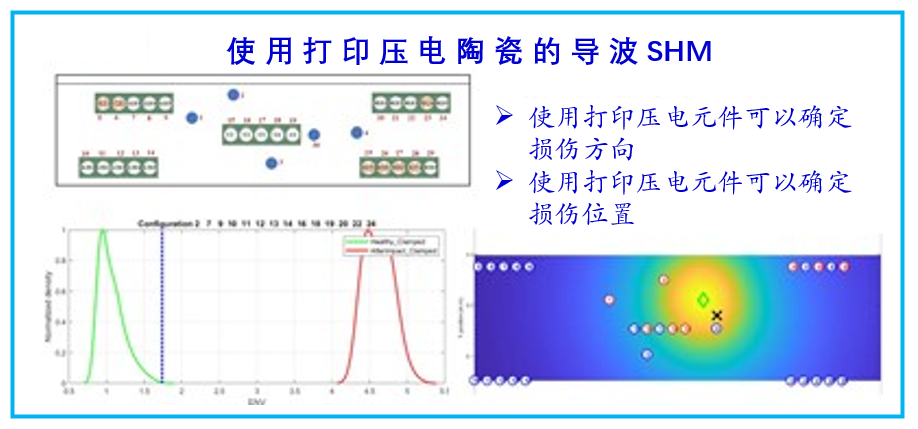
In the figure, the green area represents the test data of the undamaged panel, the red area represents the damaged panel, the area to the right of the green diamond indicates the estimated damaged location, and the black cross shows the actual impact.
He pointed out: 'We have developed a very good database that records the performance of these sensors under various damage detection methods. We are now trying to share it with the community.'。This technology of using printed PZT sensors for structural health monitoring is a new paradigm in the field of structural health monitoring. It enables a more automated approach because we can quickly print sensors and wires as needed. This single type of sensor can handle multiple functions and can be placed quickly and economically for multiple sensors as desired. Thus, even if some of our sensors are damaged or have lost components, we still have sufficient redundancy to always detect and locate the damage. “…… We can print sensors and wires on demand quickly... Placing as many sensors as possible is both fast and cost-effective. Even if some sensors are damaged or lost, we still have sufficient redundancy to always detect and locate the damage.
Mehbalar said: 'Printing can also easily place the sensors in places where we can easily insert them, so that we can query the parts when the aircraft is on the ground.' 。For instance, when an aircraft is parked at the airport, we simply need to plug in the power supply and conduct the test by sending waves and making measurements. Subsequently, we can examine whether certain areas of the fan blades are damaged, or if the stiffness has changed, as well as the extent of the damage. Then, we can attempt to use algorithms to quantify the severity of the damage.
Disassembly and recycling
The final part of the MORPHO project involves disassembling the components for recycling or reuse. Mehbar said: 'The first approach we proposed for the FOD panel was to remove the titanium leading edge from the composite material and use embedded sensors to monitor this process.' 。
He continued: 'At ENSAM, we used laser shock debonding technology for the disassembly. There, a high-power laser beam generated a wave, which we sent to the sacrificial layer on the side of the sample composite material.' In this case, the sacrificial layer was a thin aluminum strip that was adhered to an eight-layer thick CFRP sample representing the FOD panel. 'This setup was merely to prove that disassembly was possible.'
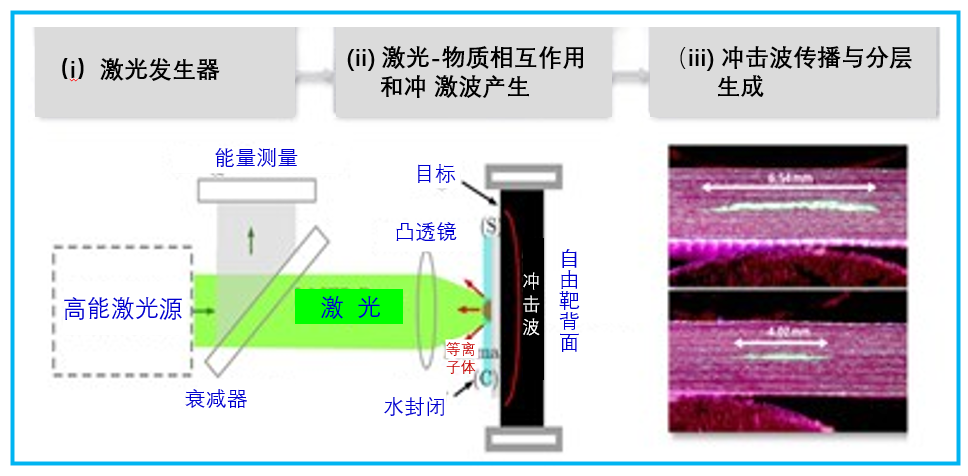
Laser impact disassembly process is used to separate the metal edge from the CFRP laminate. Please note that the system containing the sample has an inlet, allowing water to flow through this area to limit the expansion caused by plasma.
Meherbal pointed out: 'We exposed the samples to the laser beam, and the laser beam would generate small plasma waves caused by temperature expansion (thermal expansion).' 。This device utilizes laser-transparent materials, such as water, to limit expansion and further increase the pressure caused by the expanding plasma. This results in the generation of compressive shock waves within the material body, which propagate internally based on the density and other parameters of the material.
'We have demonstrated that we can create layers in any layer of the composite material,' he continued, 'and by adjusting the laser parameters, we can control the position and size of the layers. Then, we used this process to go beyond the layers and actually remove the titanium front edge from the FOD panel. We also tested the FOD panel with the aluminum front edge. The method was the same - only a new calibration was required.'
Meherbal explained how this parameter adjustment enables the removal of components without damaging the composite material, and added that the MORPHO project partner, Patre University, has also developed a good finite element simulation that can predict how this process will achieve the removal, including the damage results.

Laboratory-scale tests showed the CFRP samples before (a) and after (b) pyrolysis. On the right and bottom were the recovered carbon fibers. Microscopic images showed that the residual resin adhered to the recovered carbon fibers after pyrolysis (left), and then it was removed through oxidation (right)
After separation, the composite materials were processed by Comet Group, one of the partners of MORPHO from Belgium. This group used a pilot production line to pyrolyze the resin and recover the fibers. It developed an optimal pyrolysis process, which involved pyrolyzing for 2 hours and then oxidizing for 30 minutes. This resulted in a degradation of the mechanical properties of the recycled carbon fibers (rCF) to around 10%. Mehbar said that the idea was to use it for internal parts in cars or aircraft, rather than structural parts.
Challenges, achievements and possible applications of open rotor engines?
Mehbar said that overall, the MORPHO project was successful, demonstrating multiple technologies and making progress, although there were significant challenges. 'The RTM process is easy to monitor with sensors, but integrating sensors into the process is very difficult. Integrating fiber optic grating sensors into this process is very laborious and requires several specific developments and tests. Developing printed PZT sensors for SHM is the same,' he pointed out. 'We spent a lot of time developing how to integrate FBG and PZT sensors into the SHM process.'
He also pointed out that for the RTM process, the sensors are used in an open loop. He said: 'Our vision is to provide a control feedback loop to optimize the process, but this is not easy to do and requires more development.' 。
'The process of printing PZT sensors truly revolutionized the paradigm of SHM... including how to optimize their placement and interrogation.'
At the same time, printing PZT sensors was one of the greatest achievements of this project. Mehboob said: 'The process of printing PZT sensors truly changed the paradigm of SHM.' 。'I have been developing this technology for 10 years, including how to optimize their placement and usage. Now, printing and using them is very easy. This can be completed at the end of any manufacturing process.'
He continued: 'For recycling mixed composite materials/metal parts, I think the laser disassembly process has opened up many possibilities.' 。Furthermore, Comet has also completed a commercial study to quantify the energy required for pyrolysis and the potential gains that can be obtained from rCF. Their analysis indicates that for these fan blade-type structures, using pyrolysis for recycling is feasible and the fibers can be reused in other composite materials.
Will ENSAM and other MORPHO partners continue to use any of the technologies demonstrated? Mehbar said: 'This was our vision at the beginning of the project, consistent with Safran Group's priorities at that time. We have provided them with the software for the RTM process of the twin hybrids, and we are now discussing how to further mature the sensor technology at the TRL level. We have not conducted any tests on the actual fan blades, only on the demonstration panels. Therefore, it is still necessary to see what happens when you use these technologies in actual flight components.' “…… Without the pod, the blades would be exposed,
and could be severely affected by a large amount of FOD... Even if
Even a small influence can lead to significant consequences during operation. For instance, they can disrupt the balance of rotation... However, we have proven that SHM is possible. You can observe these damage events and structural changes.'
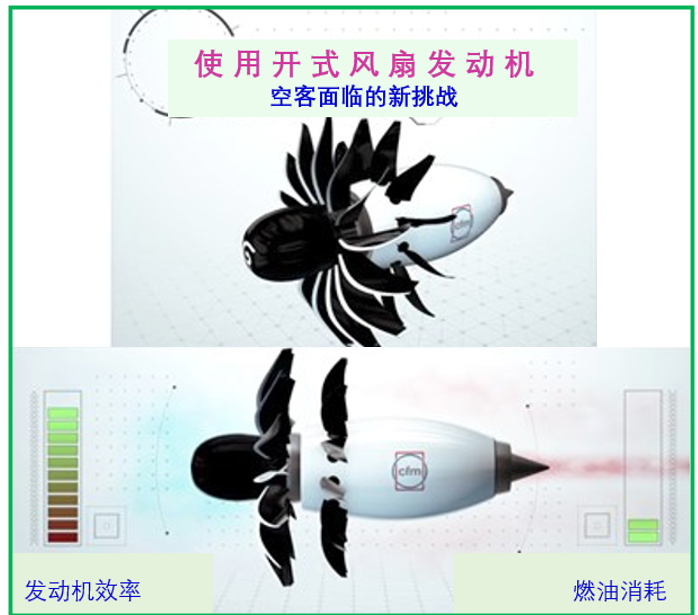
Using these sensors to detect damage is indeed quite interesting, as Airbus tends to provide open rotor engines for the next generation of single-aisle aircraft that are planned to be put into use after 2035. Mehbar said: 'I don't know if open rotors will be the future, but at the beginning of the MORPHO project, it was still a priority for Safran Group. However, the open rotor design brings challenges because there are no pods, and the blades will be exposed and may be affected by a lot of FOD.' This impact could cause problems for all CFRP parts.
However, for the fan blades of aircraft engines, even a small impact can have significant consequences during operation. For example, they can change the rotational balance, which can be very serious, Mehbar said. He explained: 'When the damage is severe, you can see it.'。'You don't need SHM. But when you have a very small impact, which may only cause almost imperceptible external damage, internal layering and/or stiffness changes might occur, which you cannot see. This will alter the rotation of the fan blades. However, we have proven that SHM is possible, and these damage events and structural changes can be observed. I believe MORPHO has advanced technology that will create new opportunities and possibilities for composite materials.' ------ End ------
Original text, 'Next-gen fan blades: Hybrid twin RTM, printed sensors, laser shock disassembly' 2025.8.25
Yang Chaofan2025.8.26









