


English
- English

CONTACT US
If you have any queries, get in touch today! Don't hesitate. We try to take the extra step for our customer satisfaction.
Our Products
We will provide high-quality and low-cost carbon fiber materials
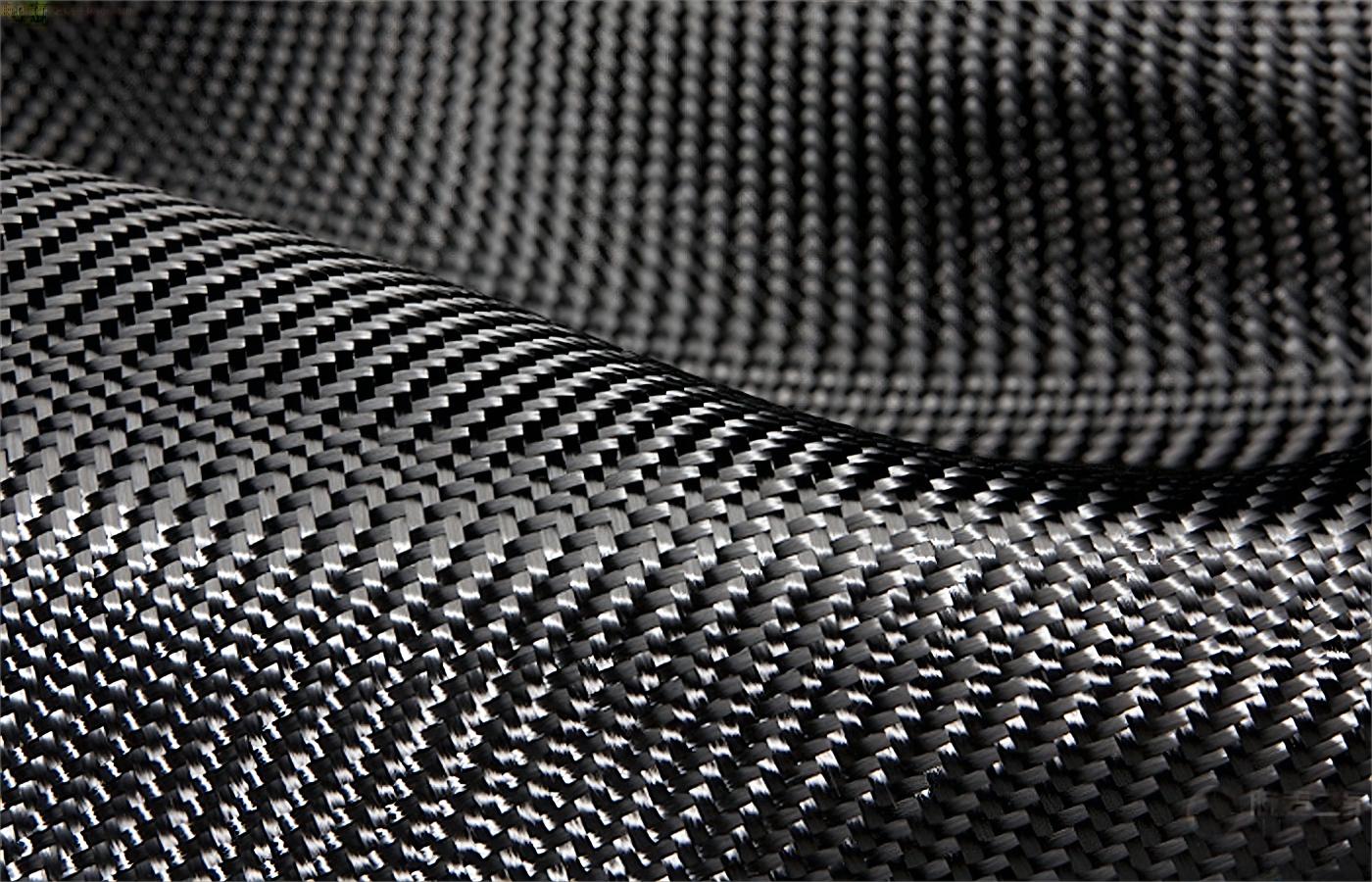

Carbon fiber cloth
I. General Basic Indicators (Applicable to All Dry Fabrics) • Raw Materials: PAN-based T400 / T700 / T800 • Yarn Specifications: 3K / 6K / 12K / 24K • Single Fiber Diameter: 7 μm • Fiber Density: 1.76 g/cm³ • Carbon Content: ≥95% (≥99% for high-purity grade) • Bleaching Agent Type: Epoxy / Polyurethane • Bleaching Rate: 0.8% - 1.2% • Tensile Strength: ≥3500 MPa (T400); ≥4900 MPa (T700) • Elastic Modulus: 230 - 240 GPa • Elongation at Break: 1.5% - 2.0% • Width: 1000 mm / 1250 mm / 1500 mm • Moisture Content: ≤0.5% • Ash Content: ≤0.3% II. Knitted Fabrics (Plain / Twill / Satin) Parameters 1) Plain Weave (1×1) • Common Weights: 80 / 160 / 200 / 300 g/㎡ • Thickness: 0.08–0.18 mm • Weave Density: Approximately 4.0–6.0 strands/cm • Characteristics: Balanced bidirectional strength, stable size, and not prone to deformation 2) Twill Weave (2×2) • Common Weights: 200 / 240 / 300 / 400 g/㎡ • Characteristics: Good drape, strong moldability, and attractive appearance 3) Satin Weave (5HS/8HS) • Common Weights: 200 / 280 g/㎡ • Characteristics: Best flexibility, shiny surface, suitable for appearance parts III. UD Unidirectional Fabric (Most Common Industrial Grade) • Weight: 150 / 200 / 300 / 450 / 600 g/㎡ • Thickness: 0.10–0.35 mm • Weft (Fixed Thread): Polyester / Glass Fiber Weak Thread • Longitudinal Tensile Strength: ≥3800 MPa • Longitudinal Modulus: ≥240 GPa • Transverse Strength: Extremely Low (Only for Fixing Purpose) • Rapid Penetration Speed, Suitable for Preforms, Wind Power, Carbon Ceramic Reinforcement IV. Key Performance Indicators (Required for Export / Factory Inspection) 1. Face Density Deviation: ±3% (High Quality); ±5% (Qualified) 2. Unit Area Weight: Conforms to the nominal g/㎡ 3. Tensile Breaking Strength: ◦ Weft Direction ≥ Nominal Value ◦ Warp Direction ≥ Nominal Value 4. Shear Performance: No Slippage, No Layering, No Hairing 5. Heat Resistance: ◦ In Air: ≤450℃ ◦ In Inert Atmosphere: ≥2000℃ Stable 6. Corrosion Resistance: Resistant to acids and alkalis, salt fog, and does not rust. 7. Penetrability: The resin penetration time is short, without dry spots or bubbles. V. Recommended Parameters for Carbon Ceramic / Mesh Tire Specialized Dry Cloth You use T400 + black polypropylene mesh tire / carbon ceramic preform most commonly: • Specification: 12K plain weave 200g/㎡ or 300g/㎡ • Bleaching: Low bleaching amount ≤ 1.0% (有利于 high-temperature degreasing) • Thickness: 0.12–0.16 mm • Moderate porosity, easier CVI deposition • Strength meets the structure of the preform, not prone to needle puncture damage VI. Minimalist Parameter Table (Can be directly sent to customers / factories) • Product: Carbon fiber woven dry cloth • Model: 12K T400 • Organization: Plain weave • Weight: 200g/㎡ • Thickness: 0.12mm • Tensile strength: ≥ 3500MPa • Modulus: ≥ 230GPa • Bleaching rate: 1.0% • Width: 1000mm • Carbon content: ≥ 95% • Ash content: ≤ 0.3%
- Parameters
I. General Basic Indicators (Applicable to All Dry Fabrics) • Raw Materials: PAN-based T400 / T700 / T800 • Yarn Specifications: 3K / 6K / 12K / 24K • Single Fiber Diameter: 7 μm • Fiber Density: 1.76 g/cm³ • Carbon Content: ≥95% (≥99% for high-purity grade) • Bleaching Agent Type: Epoxy / Polyurethane • Bleaching Rate: 0.8% - 1.2% • Tensile Strength: ≥3500 MPa (T400); ≥4900 MPa (T700) • Elastic Modulus: 230 - 240 GPa • Elongation at Break: 1.5% - 2.0% • Width: 1000 mm / 1250 mm / 1500 mm • Moisture Content: ≤0.5% • Ash Content: ≤0.3% II. Knitted Fabrics (Plain / Twill / Satin) Parameters 1) Plain Weave (1×1) • Common Weights: 80 / 160 / 200 / 300 g/㎡ • Thickness: 0.08–0.18 mm • Weave Density: Approximately 4.0–6.0 strands/cm • Characteristics: Balanced bidirectional strength, stable size, and not prone to deformation 2) Twill Weave (2×2) • Common Weights: 200 / 240 / 300 / 400 g/㎡ • Characteristics: Good drape, strong moldability, and attractive appearance 3) Satin Weave (5HS/8HS) • Common Weights: 200 / 280 g/㎡ • Characteristics: Best flexibility, shiny surface, suitable for appearance parts III. UD Unidirectional Fabric (Most Common Industrial Grade) • Weight: 150 / 200 / 300 / 450 / 600 g/㎡ • Thickness: 0.10–0.35 mm • Weft (Fixed Thread): Polyester / Glass Fiber Weak Thread • Longitudinal Tensile Strength: ≥3800 MPa • Longitudinal Modulus: ≥240 GPa • Transverse Strength: Extremely Low (Only for Fixing Purpose) • Rapid Penetration Speed, Suitable for Preforms, Wind Power, Carbon Ceramic Reinforcement IV. Key Performance Indicators (Required for Export / Factory Inspection) 1. Face Density Deviation: ±3% (High Quality); ±5% (Qualified) 2. Unit Area Weight: Conforms to the nominal g/㎡ 3. Tensile Breaking Strength: ◦ Weft Direction ≥ Nominal Value ◦ Warp Direction ≥ Nominal Value 4. Shear Performance: No Slippage, No Layering, No Hairing 5. Heat Resistance: ◦ In Air: ≤450℃ ◦ In Inert Atmosphere: ≥2000℃ Stable 6. Corrosion Resistance: Resistant to acids and alkalis, salt fog, and does not rust. 7. Penetrability: The resin penetration time is short, without dry spots or bubbles. V. Recommended Parameters for Carbon Ceramic / Mesh Tire Specialized Dry Cloth You use T400 + black polypropylene mesh tire / carbon ceramic preform most commonly: • Specification: 12K plain weave 200g/㎡ or 300g/㎡ • Bleaching: Low bleaching amount ≤ 1.0% (有利于 high-temperature degreasing) • Thickness: 0.12–0.16 mm • Moderate porosity, easier CVI deposition • Strength meets the structure of the preform, not prone to needle puncture damage VI. Minimalist Parameter Table (Can be directly sent to customers / factories) • Product: Carbon fiber woven dry cloth • Model: 12K T400 • Organization: Plain weave • Weight: 200g/㎡ • Thickness: 0.12mm • Tensile strength: ≥ 3500MPa • Modulus: ≥ 230GPa • Bleaching rate: 1.0% • Width: 1000mm • Carbon content: ≥ 95% • Ash content: ≤ 0.3%
Carbon Fiber Dry Cloth (Resin-Free Dry Fabric) Comprehensive List of Categories, Properties + Applications
Base Material: PAN-based T300/T400/T700 raw fibers, divided into three categories: woven fabric, unidirectional UD fabric, and multi-directional warp-knitted fabric. Suitable for vacuum infusion, RTM, molding, carbon ceramic preforms, and PP mesh tire composite one, four mainstream dry fabric categories + Basic Parameters 1. Plain Weave Fabric (1×1 interlacing) • Common Specifications: 3K/6K/12K, weight 80/160/200/300g/㎡, thickness 0.07~0.17mm, width 1000/1250mm • Mechanical Properties: Balanced bidirectional strength, tensile strength of warp and weft ≥ 3500MPa, modulus ≥ 230GPa; optimal dimensional stability, not prone to deformation, flat laying • Advantages and Disadvantages: Dense fabric surface, good shearing performance; poor draping, difficult to cover complex curved surfaces • Applications: Flat molds, building reinforcement, carbon ceramic plate preforms, instrument shells, PP mixed-compound flat net tires 2. Diagonal Weave Fabric (2×2 mainstream) • Specifications: 3K/12K, 200/240/300/400g/㎡, thickness 0.11~0.22mm • Performance: Balanced bidirectional mechanics, excellent draping, strong ability to adhere to curved surfaces, beautiful texture, moderate resin penetration speed • Applications: Motorcycle shells, model aircraft, bicycle frames, special preforms, appearance parts, high-end sports equipment 3. Satin Weave Fabric (5HS/8HS five-ribbed) • Specifications: Mainly high-end 3K, 200~290g/㎡, smooth fabric surface, long float fibers • Performance: Best flexibility, easy to cover large curvature surfaces, high surface gloss; slightly lower shear resistance than plain weave • Applications: High-end luxury shell covers, racing covers, precision special composite materials 4. Unidirectional UD Dry Fabric (No weaving, fibers arranged in the same direction, largest industrial usage) • Specifications: 12K/24K, 150~600g/㎡, thickness 0.1~0.33mm, weft glass fiber sparse weft fixed fibers • Core Performance: Ultra-high strength in the direction of the fibers: longitudinal tensile strength ≥ 3800MPa, modulus ≥ 240GPa; lower strength in the transverse direction, directional reinforcement, resin penetration fast • Usage: Wind turbine blade main beams, building first-level reinforcement, carbon ceramic preform directional reinforcement, new energy vehicle chassis, pultrusion profiles (you prefer UD short cut / UD fabric for PP + T400 mesh tires) 5. Multi-directional Warp-knitted Fabric (0°/90°/±45° four directions, specially for wind power) • Weight 400~1200g/㎡, multi-layer fibers warp-knitted without interlacing, balanced multi-directional force • Performance: High strength in all directions, excellent fatigue resistance, good pouring and drainage • Application: Wind turbine blade skins, ship hulls, large RTM composite 2. General Key Physical and Chemical Properties (Common to all categories) 1. Density: 1.75~1.77g/cm³, only one-fourth of steel, lightweight core advantage 2. Carbon content: Industrial grade ≥ 95%, carbon ceramic / high-purity grade ≥ 99%, ash content ≤ 0.3% (avoiding high-temperature sintering impurities foaming) 3. Resin coating residue: 0.5%~1.2% (epoxy coating, suitable for epoxy / PP / phenolic bonding; degreased fabric < 0.2% suitable for carbon ceramic high-temperature carbonization) 4. Heat resistance: 420℃ oxidation in air, > 2200℃ stable in inert atmosphere; Resistant to acid, alkali, salt fog, non-corrosive, zero creep 5. Forming compatibility: Dry cloth without resin, compatible with ** vacuum infusion, RTM, molding, hot press tank, hot rolled composite PP (black polypropylene + T400 mesh fabric)** full process. III. Industry-specific application scenarios (aligned with your carbon ceramic + mesh fabric business) 1. Carbon ceramic preform / carbon powder + PP mesh fabric (your main business) • Plain weave 200/300g: Preform surface layer, uniform pores, combined with carbon fiber powder + black polypropylene hot-rolled into composite mesh tire; • 12K UD unidirectional fabric: Mesh tire directional reinforcement, enhancing mesh tire tensile strength, improving the strength of products after high-temperature carbonization; • Advantages: Dry cloth pores facilitate PP melt infiltration, forming connected pores after carbonization, increasing SiC infiltration volume. 2. Wind power new energy (the largest downstream) • UD unidirectional fabric: Main force of wind turbine main frame; Multi-axis fabric: Blade skin, blade root reinforcement; Weight reduction by 30% +, improving blade fatigue life by 20 years + 3. Building reinforcement National standard 12K-200g (0.111mm)/300g (0.167mm) unidirectional fabric, beam-column floor crack reinforcement, bridge reinforcement, without increasing component self-weight 4. Transportation & New Energy Vehicles Inclined weave fabric: Body covering parts; UD fabric: Chassis, battery box,整车 weight reduction, improving range 5. Aerospace 3K ribbed / plain weave prepreg substrate, fuselage secondary load-bearing parts, unmanned aircraft fuselage, T700/T800 high modulus dry fabric as the main material 6. Sports and leisure Inclined weave 3K fabric: Rackets, fishing rods, vehicle frames; Exposed appearance parts prefer inclined weave / ribbed IV. Selection comparison table (black polypropylene PP + T400 mesh fabric selection) 1. General ordinary mesh fabric: 12K plain weave 200g, high cost performance, mixed 200 mesh carbon powder + PP hot-rolled; 2. High-strength reinforcing mesh fabric: 12K unidirectional UD 300g, longitudinal tensile strength doubled; 3. Irregular curved surface mesh fabric: 12K inclined weave 300g, fits the mold without warping.


 Copy product links
 Long by picture save/share
INQUIRY


Add Successfully
INQUIRY
Add Successfully
Related Products
Carbon fiber cloth

Carbon fiber cutting

Carbon Fiber Brake Discs
Carbon-carbon brake discs adopt carbon fiber composite material. With high temperature resistance, stable friction, lightweight and long service life. Suitable for aerospace and racing, custom sizes available.

Carbon Fiber Fasteners
Carbon fiber fasteners are carbon-carbon composite fasteners with high temperature resistance, low density and corrosion resistance. Custom sizes for aerospace and thermal industry.
