


English
- English

CONTACT US
If you have any queries, get in touch today! Don't hesitate. We try to take the extra step for our customer satisfaction.
Our Products
We will provide high-quality and low-cost carbon fiber materials


Carbon fiber cutting
PAN base carbon fiber powder (special for carbon ceramic / tire preform) complete technical parameters
1. Basic physical property parameters (mainstream T400/T700 raw material ground powder, industrial general standard) Table
Project Industrial Grade High-Purity Carbon Ceramic Special Grade Remarks
Base Material PAN Polyacrylonitrile-based (T400/T700 raw fibers) T700S High-Purity Raw Fiber, No Recycled Materials Carbon Ceramic Prohibited Asphalt Base, Recycled Carbon Powder
Single Fiber Diameter 7-8 μm 7 μm Domestic General Use
True Density 1.75 ± 0.03 g/cm³ 1.76 g/cm³ Body Density of Fiber
Packing Density 0.28-0.45 g/cm³ 0.32-0.40 g/cm³ The larger the mesh number, the lighter the packing
Carbon Content ≥95.0% ≥99.0% (High-end ≥99.9%) Impurities Fe, Ca, Na < 50 ppm
Water Content ≤0.3% ≤0.15% Prevent PP Tire from Moisture Absorption and Caking
Ash and Impurities ≤1.2% ≤0.3% No Impurities such as Tar Fume are Released during High-Temperature Carbonization
Two. Particle Size & Length-to-Diameter Ratio (Most Common Specifications for Net Tire Mix PP, Carbon Ceramic Slurry)
1. Mesh Number - Particle Diameter Correspondence (D50 Median Particle Diameter)
100 Mesh: D50 ≈ 150 μm, Length-to-Diameter Ratio 6-10, Suitable for Pre-forming Large Pores
200 Mesh: D50 ≈ 74 μm, Length-to-Diameter Ratio 4-7, Preferred for PP + Carbon Fiber Mixed Net Tire
400 Mesh: D50 ≈ 38 μm, Length-to-Diameter Ratio 3-5, Special for Carbon Ceramic Impregnated Slurry
500/800 Mesh: D50 < 25 μm, Length-to-Diameter Ratio 2
Carbon Fiber Powder Technical Parameters, Indicators
Search 3 Keywords, Refer to 18 Documents
PAN-based Carbon Fiber Powder Complete Technical Indicators (General Industrial Grade, Carbon Ceramic / Net Tire High-Purity Grade, Suitable for PP + T400 Mixed Net Tire, Carbon Ceramic Preform)
I. Base Material Body Indicators (Raw Materials T700/T400 Raw Fibers Ground, National Standards GB/T26752, GB/T31292) Table
Project General Industrial Powder High-Purity Carbon Ceramic Special Powder Remarks
Raw Material PAN Polyacrylonitrile-based T700S New Material, No Recycled Waste Carbon Prohibited Asphalt-based, Recycled Waste Materials
Single Fiber Diameter 7 ± 0.5 μm 7 μm Domestic Mainstream
True Density 1.75 ± 0.03 g/cm³ 1.76 g/cm³ Physical Density of Fiber
Packing (Open-Cup) Density 0.30 - 0.48 g/cm³ 0.32 - 0.40 g/cm³ Higher the mesh number, lower the packing density
Tensile Strength ≥ 3500 MPa ≥ 4200 MPa Reserves the original fiber mechanical properties
Elastic Modulus ≥ 220 GPa ≥ 230 GPa
Break Elongation Rate 1.5% - 1.7% 1.4% - 1.6%
II. Chemical Purity (Key: Mixed PP Sintering without Impurities for Foaming)
Carbon Content
Industrial Grade: ≥ 95.0%
High-Purity Grade (Carbon Ceramic / Tire Mesh): ≥ 99.0%; Ultra-High Purity ≥ 99.9%
Ash Content (Inorganic Impurities)
Common: ≤ 1.2%
High-Purity: ≤ 0.3%; Precision Carbon Ceramic ≤ 0.15%
Volatile Matter
≤ 0.5% (Dried at 105°C Loss Weight)
Water Content: ≤ 0.3%; High-End ≤ 0.15% (Prevent PP From Moisture-Induced Agglomeration)
Trace Metal Impurities Fe, Ca, Na, K: Industrial < 150 ppm, High-Purity < 50 ppm
III. Particle Size, Length-to-Diameter Ratio (Most Common for Tire Mesh Mixed PP)
1. Mesh Number - D50 Comparison Table (Laser Particle Size D10/D50/D90) Table
Specification Mesh size D50 particle size Aspect ratio Applicable scenarios
Coarse powder 100 mesh 140-160μm 5-8 High-porosity net core, filling voids
Medium powder 200 mesh 70-78μm 3-5 PP + black polypropylene net core mainstream
Fine powder 400/500 mesh 22-38μm 2-3 Carbon ceramic dense preform
Particle size distribution: D90/D50 ≤ 2.0 (narrow distribution, uniform dispersion without agglomeration)
2. Aspect ratio: Net core preferably 3-5. Excessive length-to-diameter ratio causes mixing to agglomerate, too small leads to poor reinforcement
Four. Physical and electrical thermal performance indicators
Volume resistivity: 5×10⁻⁶ to 13×10⁻⁶ Ω・cm (four-probe method), stable conductivity
BET specific surface area
200 mesh: 80-150 m²/g
500 mesh: 300-450 m²/g (the finer the fineness, the larger the specific surface area)
Thermal properties
Airtight heat resistance: ≤ 450℃; inert atmosphere 2000℃ stable
Linear expansion coefficient: -1.0×10⁻⁶/℃ (near-zero expansion)
Thermal conductivity: 12-35 W/(m・K)
Five. Surface coating (key to bonding with PP / polypropylene)
Residual coating agent: ≤ 1.0% (epoxy / polyurethane coating, conducive to melting bonding with PP); De-coating powder < 0.2%
Dispersion: No water-agglomerated particles, no layering during PP extrusion / hot rolling
Six. Customized net core selection (black polypropylene + PP + T400 + carbon powder)
Common net core: 200 mesh, carbon content ≥ 95%, ash content < 1.0%
Carbon ceramic composite net core: 300-400 mesh, carbon ≥ 99%, ash content < 0.3%, metal impurities < 50ppm
- Parameters
PAN base carbon fiber powder (special for carbon ceramic / tire preform) complete technical parameters
1. Basic physical property parameters (mainstream T400/T700 raw material ground powder, industrial general standard) Table
Project Industrial Grade High-Purity Carbon Ceramic Special Grade Remarks
Base Material PAN Polyacrylonitrile-based (T400/T700 raw fibers) T700S High-Purity Raw Fiber, No Recycled Materials Carbon Ceramic Prohibited Asphalt Base, Recycled Carbon Powder
Single Fiber Diameter 7-8 μm 7 μm Domestic General Use
True Density 1.75 ± 0.03 g/cm³ 1.76 g/cm³ Body Density of Fiber
Packing Density 0.28-0.45 g/cm³ 0.32-0.40 g/cm³ The larger the mesh number, the lighter the packing
Carbon Content ≥95.0% ≥99.0% (High-end ≥99.9%) Impurities Fe, Ca, Na < 50 ppm
Water Content ≤0.3% ≤0.15% Prevent PP Tire from Moisture Absorption and Caking
Ash and Impurities ≤1.2% ≤0.3% No Impurities such as Tar Fume are Released during High-Temperature Carbonization
Two. Particle Size & Length-to-Diameter Ratio (Most Common Specifications for Net Tire Mix PP, Carbon Ceramic Slurry)
1. Mesh Number - Particle Diameter Correspondence (D50 Median Particle Diameter)
100 Mesh: D50 ≈ 150 μm, Length-to-Diameter Ratio 6-10, Suitable for Pre-forming Large Pores
200 Mesh: D50 ≈ 74 μm, Length-to-Diameter Ratio 4-7, Preferred for PP + Carbon Fiber Mixed Net Tire
400 Mesh: D50 ≈ 38 μm, Length-to-Diameter Ratio 3-5, Special for Carbon Ceramic Impregnated Slurry
500/800 Mesh: D50 < 25 μm, Length-to-Diameter Ratio 2
Carbon Fiber Powder Technical Parameters, Indicators
Search 3 Keywords, Refer to 18 Documents
PAN-based Carbon Fiber Powder Complete Technical Indicators (General Industrial Grade, Carbon Ceramic / Net Tire High-Purity Grade, Suitable for PP + T400 Mixed Net Tire, Carbon Ceramic Preform)
I. Base Material Body Indicators (Raw Materials T700/T400 Raw Fibers Ground, National Standards GB/T26752, GB/T31292) Table
Project General Industrial Powder High-Purity Carbon Ceramic Special Powder Remarks
Raw Material PAN Polyacrylonitrile-based T700S New Material, No Recycled Waste Carbon Prohibited Asphalt-based, Recycled Waste Materials
Single Fiber Diameter 7 ± 0.5 μm 7 μm Domestic Mainstream
True Density 1.75 ± 0.03 g/cm³ 1.76 g/cm³ Physical Density of Fiber
Packing (Open-Cup) Density 0.30 - 0.48 g/cm³ 0.32 - 0.40 g/cm³ Higher the mesh number, lower the packing density
Tensile Strength ≥ 3500 MPa ≥ 4200 MPa Reserves the original fiber mechanical properties
Elastic Modulus ≥ 220 GPa ≥ 230 GPa
Break Elongation Rate 1.5% - 1.7% 1.4% - 1.6%
II. Chemical Purity (Key: Mixed PP Sintering without Impurities for Foaming)
Carbon Content
Industrial Grade: ≥ 95.0%
High-Purity Grade (Carbon Ceramic / Tire Mesh): ≥ 99.0%; Ultra-High Purity ≥ 99.9%
Ash Content (Inorganic Impurities)
Common: ≤ 1.2%
High-Purity: ≤ 0.3%; Precision Carbon Ceramic ≤ 0.15%
Volatile Matter
≤ 0.5% (Dried at 105°C Loss Weight)
Water Content: ≤ 0.3%; High-End ≤ 0.15% (Prevent PP From Moisture-Induced Agglomeration)
Trace Metal Impurities Fe, Ca, Na, K: Industrial < 150 ppm, High-Purity < 50 ppm
III. Particle Size, Length-to-Diameter Ratio (Most Common for Tire Mesh Mixed PP)
1. Mesh Number - D50 Comparison Table (Laser Particle Size D10/D50/D90) Table
Specification Mesh size D50 particle size Aspect ratio Applicable scenarios
Coarse powder 100 mesh 140-160μm 5-8 High-porosity net core, filling voids
Medium powder 200 mesh 70-78μm 3-5 PP + black polypropylene net core mainstream
Fine powder 400/500 mesh 22-38μm 2-3 Carbon ceramic dense preform
Particle size distribution: D90/D50 ≤ 2.0 (narrow distribution, uniform dispersion without agglomeration)
2. Aspect ratio: Net core preferably 3-5. Excessive length-to-diameter ratio causes mixing to agglomerate, too small leads to poor reinforcement
Four. Physical and electrical thermal performance indicators
Volume resistivity: 5×10⁻⁶ to 13×10⁻⁶ Ω・cm (four-probe method), stable conductivity
BET specific surface area
200 mesh: 80-150 m²/g
500 mesh: 300-450 m²/g (the finer the fineness, the larger the specific surface area)
Thermal properties
Airtight heat resistance: ≤ 450℃; inert atmosphere 2000℃ stable
Linear expansion coefficient: -1.0×10⁻⁶/℃ (near-zero expansion)
Thermal conductivity: 12-35 W/(m・K)
Five. Surface coating (key to bonding with PP / polypropylene)
Residual coating agent: ≤ 1.0% (epoxy / polyurethane coating, conducive to melting bonding with PP); De-coating powder < 0.2%
Dispersion: No water-agglomerated particles, no layering during PP extrusion / hot rolling
Six. Customized net core selection (black polypropylene + PP + T400 + carbon powder)
Common net core: 200 mesh, carbon content ≥ 95%, ash content < 1.0%
Carbon ceramic composite net core: 300-400 mesh, carbon ≥ 99%, ash content < 0.3%, metal impurities < 50ppm
PAN-based carbon fiber powder is a micron-scale carbon material derived from polyacrylonitrile (PAN) precursor fibers through a series of processes including pre-oxidation, high-temperature carbonization, and pulverization. This material exhibits exceptional characteristics such as high carbon content, superior electrical conductivity, excellent thermal resistance, and remarkable chemical stability, making it widely applicable in composite reinforcement, conductive fillers, friction materials, and electrode materials.
The manufacturing process of PAN-based carbon fiber powder comprises five critical stages. In the pre-treatment phase, PAN fibers undergo pre-oxidation in an air environment at controlled temperatures ranging from 200-300°C to form a ladder-like structure. The carbonization stage involves gradient heating under inert gas protection, with temperatures reaching 1000-3000°C to ensure complete graphitization of the fiber structure. The pulverization process utilizes an air jet mill for multi-stage grinding, with particle size controlled within 5-50μm by adjusting the classifier wheel speed, achieving a particle size distribution coefficient of ≤1.5. Surface modification employs various coupling agents such as silane KH550 or titanate NDZ-201, with addition quantities ranging from 0.5-2% of the powder mass. Final product quality is verified using laser particle size analyzers, BET surface area analyzers, and X-ray diffraction (XRD) equipment.
In application technologies, this material demonstrates significant performance enhancements across various fields. As a reinforcing phase in polymer composites, a 3-5% addition can increase epoxy resin flexural strength by 40-60%. When utilized as a conductive filler in electronic packaging materials, the percolation threshold can be reduced to 0.8vol%, with volume resistivity reaching 10²-10³Ω·cm. In friction materials, incorporating 15-20% carbon fiber powder maintains brake pad friction coefficients within 0.35-0.45 while reducing wear rates by over 30%. For lithium-ion battery electrodes, adding 1-2% as a conductive agent increases electrode compaction density to 3.4g/cm³ and extends cycle life by over 200 cycles.
The material specifications include: carbon content ≥95%, ash content ≤0.5%, tap density 0.2-0.5g/cm³, specific surface area 200-500m²/g, and electrical conductivity 100-1000S/cm. Particle size distribution parameters are: D10≥3μm, D50 controlled within 5-15μm, and D90≤30μm. Customized parameter services are available for specialized applications, such as boron content control ≤0.1ppm for nuclear industry products and iron content ≤50ppm for lithium battery applications.
品名 | 碳纤维粉 |
拉伸强度 | ≥3500 |
密度 | 1.75 |
单丝直径 | 7 |
含碳量 | ≥95 |
电阻率 | 1.5×10³ |
线膨胀系数 | -0.1×10 |
长径比 | 2:1-8:1 |
细度(目数) | 30-1000 |
Technical Specifications of Chopped Carbon Fiber
Yangzhou Fusion New Materials Co., Ltd.
1. Physical Properties
· Length: Customizable from 1 mm to 100 mm upon application requirements
· Filament Diameter: 5–10 μm, affects specific surface area and interfacial bonding strength with matrix
· Density: 1.75–1.8 g/cm³, lightweight and high-strengt
2. Mechanical Properties
· Tensile Strength: 3000–5000 MPa, determines tensile resistance of composites
· Tensile Modulus: 200–240 GPa, governs material stiffness
· Elongation at Break: 1.5–2.1%, characterizes material toughness
3. Surface Properties
· Sizing Agent Content: 0.5–2.0%, controls compatibility and dispersibility between fiber and resin matrix
· Surface Resistivity: 1.0–1.6 Ω·cm, defines electrical conductivity performance
4. Processing Characteristics
· Dispersibility: Uniform dispersion without agglomeration to guarantee homogeneous distribution in matrix
· Resin Wettability: Excellent wettability improves interfacial bonding strength
· Bulk Density: 0.4–0.8 g/cm³, impacts processing and molding performance
5. Other Performance Indicators
· Carbon Content: ≥95%, ensures superior electrical conductivity and corrosion resistance
· Thermal Stability: Stable performance under high-temperature service conditions
Supplementary Business Note
All above parameters directly affect the performance and application outcome of chopped carbon fiber, which shall be selected and optimized in accordance with specific application requirements.


 Copy product links
 Long by picture save/share
INQUIRY


Add Successfully
INQUIRY
Add Successfully
Related Products
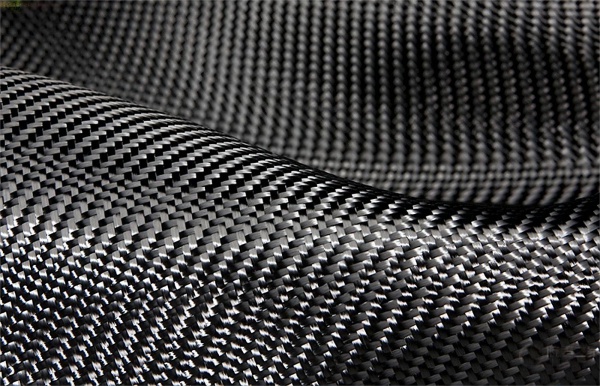
Carbon fiber cloth

Carbon fiber cutting

Carbon Fiber Brake Discs
Carbon-carbon brake discs adopt carbon fiber composite material. With high temperature resistance, stable friction, lightweight and long service life. Suitable for aerospace and racing, custom sizes available.

Carbon Fiber Fasteners
Carbon fiber fasteners are carbon-carbon composite fasteners with high temperature resistance, low density and corrosion resistance. Custom sizes for aerospace and thermal industry.
